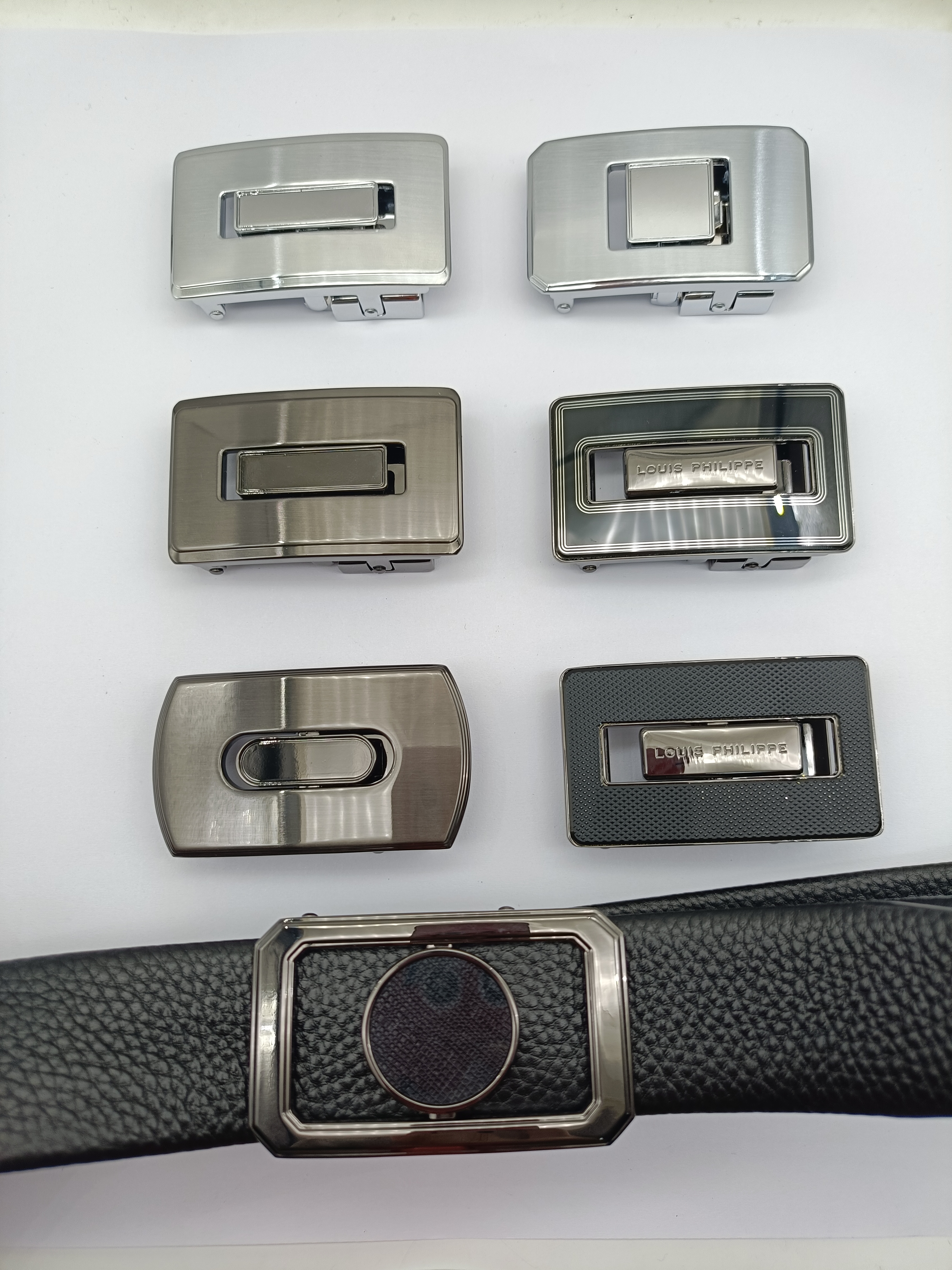
For most of the last decade, the story in luxury was simple: prices went up, and kept going up. Even accessories — once the friendly, attainable corner of a brand — drifted out of reach. In 2026 that pendulum is swinging back, and one small piece of metal is leading the way: the belt buckle.
## The return of the accessible icon
Fashion houses are rediscovering a lesson they used to know well. The first relationship a customer forms with a brand rarely starts with a four-figure handbag. It starts with something smaller — a piece that carries the brand's whole identity at a price a new customer can say yes to. The belt buckle is exactly that piece.
The mechanics are visible on the runway. A reworked belt can become a season's quiet best-seller, recognised instantly and bought widely. The same logic now drives mini cardholders shaped like icon bags, and small leather goods that share the design language of pieces ten times their price. The strategy is consistent: extend the brand's imagination to a wider audience without discounting the hero products that anchor it.
For a buckle, the entry-point role places a specific demand on design. It has to read as unmistakably *yours* from across a room, survive daily wear, and still land at an accessible price. That is a manufacturing problem as much as a creative one.
## Where design meets the metal
A sculptural buckle lives or dies on two decisions made before anyone touches leather: the material, and the process.
When volumes are modest and the form is intricate, casting alloys earn their place. [[Zamak-3-Zinc-Alloy|Zinc alloy (Zamak 3)]] has a low melting point, which is precisely what lets it hold fine logo detail and complex three-dimensional shapes — ideal for an elaborate signature buckle produced in the hundreds rather than the tens of thousands. Where a heritage or premium positioning calls for a heavier, jewellery-grade feel, [[316L-Stainless-Steel|316L stainless steel]] takes over: impervious to leather tannins, mirror-polishable, and built to outlast the strap.
The journey from raw shape to finished piece is longer than most buyers realise. A cast or stamped blank has its prongs and pins added, then is tumbled smooth in a rotating drum of ceramic media to even the surface and soften edges — often removing the need for heavier grinding later. Only then does it move to polishing, and finally to plating. (For the full sequence, see our guide to the [[OEM-ODM-Prototyping|OEM development process]].)
## The finish is where it gets serious
The last step — the [[Electroplating-Finishes|finish]] — is where aesthetics, durability and compliance all arrive at once. For white and silver tones in particular, the industry is in the middle of a quiet shift away from nickel-bearing systems toward nickel-elimination, because even a "nickel-free" alloy that sits within legal limits still carries the metal in the system, with a release risk attached.
This is the same principle we build around with [[PVD-Coating|PVD coating]] on stainless steel: colour that holds for years, no tarnish against leather, and skin-contact safety that passes [[Nickel-Release-REACH|nickel-release and REACH testing]] by design rather than by exception. For any brand selling into Europe, a buckle that looks beautiful but can't carry its compliance documents is no longer a buckle you can use.
## What this means if you're building a 2026 line
If the buckle is the new front door to your brand, three questions are worth settling early:
A buckle has to be recognisable, so the design needs room for a signature — a mechanism, a profile, or a logo treatment that customers learn to spot. It has to be affordable, so material and process should be matched to the real volume, not over-specced. And it has to be compliant, so the finish and its test documentation belong in the conversation from the first sketch, not the final invoice.
Get those three right and the buckle does what luxury now needs most: it makes the brand's world accessible without making it feel cheaper. The smallest piece of hardware turns out to be one of the most strategic.
---
*At HY Hardware,we develop signature belt buckles, chains and locks in zinc alloy and 316L stainless steel for leather brands — from a single sketch through sampling to compliant, finished hardware. If a signature buckle is on your 2026 roadmap, we're glad to help you build it.*
*Industry context in this article draws on reporting by Leather & Luxury Magazine (May–June 2026).*