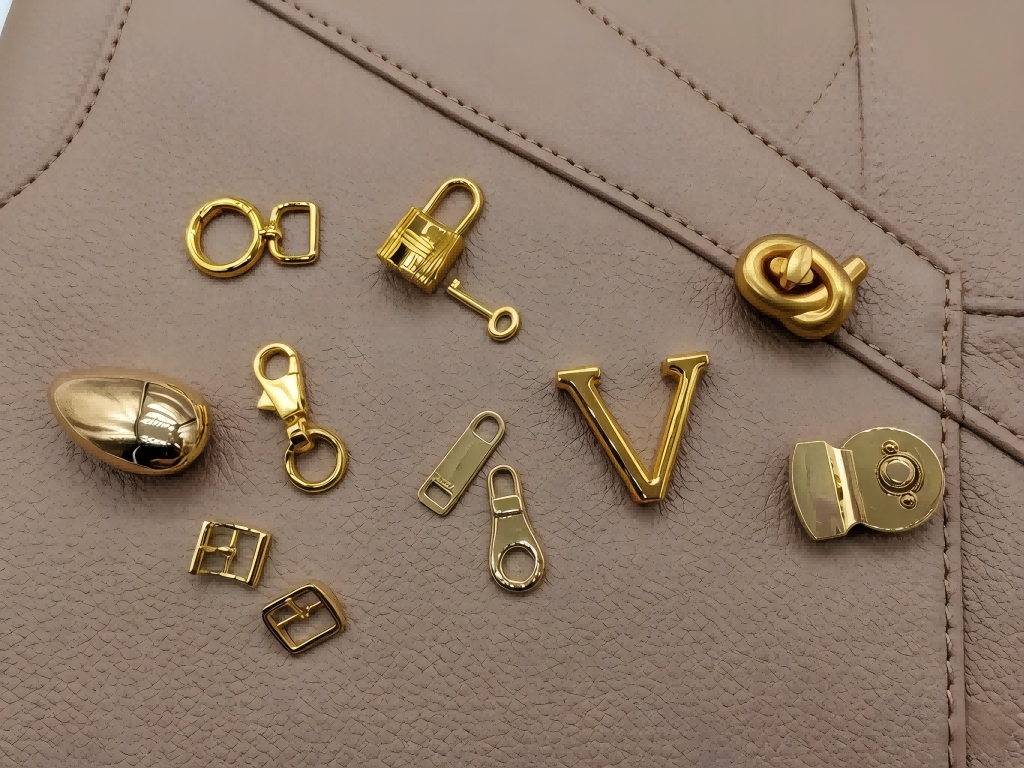
In the high-end leather goods and accessories sector, hardware is hailed as the "soul of handbags and belts." However, with increasingly stringent EU REACH regulations (Registration, Evaluation, Authorisation and Restriction of Chemicals) and RoHS directives on the control of hazardous substances in consumer products, many designer brands and handbag factories frequently face two major pain points when sourcing zinc alloy hardware: exceeding environmental test standards and customer complaints about the electroplated surface (such as blistering, pinholes, and discoloration). As a professional manufacturer deeply rooted in the European brand hardware supply chain, we provide an in-depth breakdown of how to truly achieve "double zero customer complaints" from source to finished product.
1. Striking the Environmental Redline: Passing REACH Standard For accessible luxury and high-end designer brands entering the European market, hardware must meet two stringent chemical standards: Lead-Free/Low Lead: Total lead content is typically required to be below 90 ppm or 100 ppm. Nickel-Free/Hypoallergenic Testing: According to EN 1811 standards, the nickel release rate of metal parts in prolonged skin contact must be less than 0.5 µg/cm²/week.
💡 Our Zero-Complaint Solution: High-Purity No.3 Zinc Ingot: We strictly refuse to use any recycled materials. This eliminates the risk of excessive levels of heavy metals such as lead and cadmium at the source. Nickel-Free Plating Process: Many factories only apply nickel-free plating to the surface (outermost layer). Our nickel-free process involves a complete nickel-free treatment from the base layer to the surface, physically eliminating the release of nickel and ensuring the finished product perfectly passes Europe's extremely stringent saliva and sweat tests.
2. Eliminating the 3 Major Defects in Zinc Alloy Die-Casting & Plating Many purchasing managers encounter this awkward situation: the hardware looks beautiful when shipped, but after arriving at European sea freight warehouses or high-humidity retail stores in coastal cities, the surface begins to bubble, turn green, and develop honeycomb-like pinholes. This is usually because the factory lacks a comprehensive supply chain quality control logic. Defect Name, Cause, Our Luxury-Grade Solution: Surface Bubbling: Internal pores exist during die casting; gas expands during the high-temperature baking of electroplating. Pinholes/Pitting: Incomplete surface polishing, or excessive pickling before electroplating leading to substrate corrosion. We insist on 8-Stage Hand Polishing + automated fully enclosed ultrasonic degreasing and rust removal to protect the nano-level flatness of the substrate. Peeling/Flaking: Insufficient adhesion, or the plating is too thin. Strictly control the thickness of the plating layer.
3. Supply Chain Integration: From Cost-Effective Zinc Alloy to 316L Stainless Steel. Modern high-end leather goods brands, in pursuit of ultimate brand premium, often adopt a "dual-hardware strategy" in their product lines: Core Volume Lines: Utilizing high-density zinc alloy belt buckles and bag accessories (D-rings, buckles, zipper pulls) that meet European environmental standards. This ensures both quality and diverse designs while maintaining extremely high cost-effectiveness. Limited-edition high-end / men's jewelry: Upgraded to 316L stainless steel hardware. Because we own a dedicated factory that manufactures stainless steel handbags, leather goods, and jewelry for luxury and designer brands, we can seamlessly apply jewelry-grade precision CNC machining and mirror polishing technology to your leather hardware, achieving colorfastness, zero corrosion, and heirloom-level physical properties.
Based on over 18 years of experience in the hardware industry, we deeply understand the various problems that arise in the application of hardware, so we can minimize defects and quality issues for you during production.
Feel free to consult and discuss any issues you encounter in hardware or leather goods production.